Bear
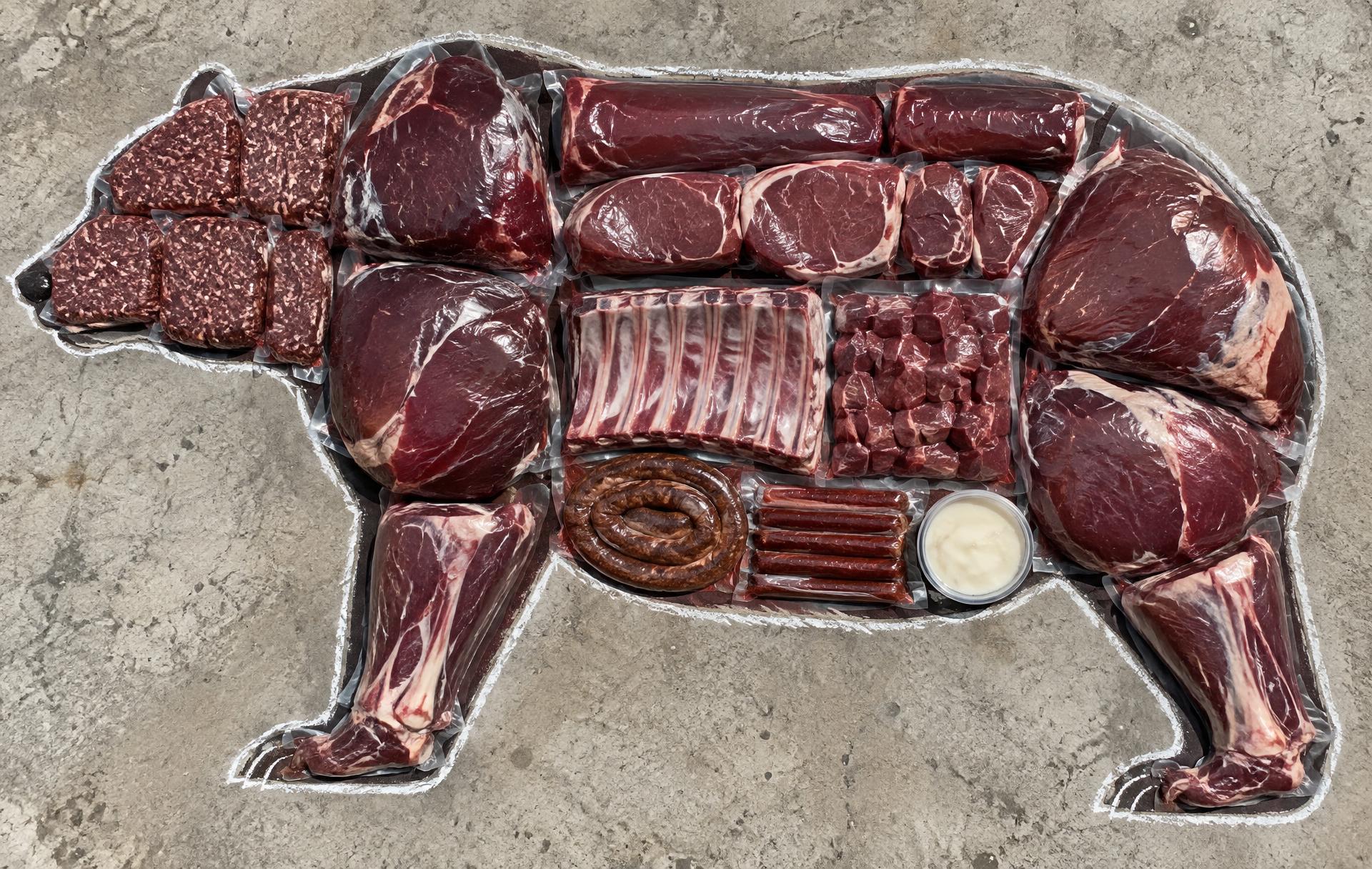
Bear eats more like pork than deer: real fat, rich dark meat, and roasts that shred. The one non-negotiable rule is temperature — bear commonly carries trichinella, so every cut goes to 160°F, no exceptions, and the rendered fat is prized for pie crust and frying. A fall bear on berries and acorns is excellent; a spring bear can be strong.
Cook everything to 160°F. No rare steaks, no dry-cured products, no carpaccio — trichinella risk is real in bear.
Not sure where to start?
We'll fill in the standard bear order — the 10 cuts most customers take, cut and wrapped the usual way. Nothing is locked in; change or remove anything after.
Or tell me how you eat
Answer a few quick questions — how many of you there are, how you cook — and I'll fill in the whole sheet with a reason beside every cut.
Off the outline
Fat, bones & odds
Tap any part of the animal to see the meat that comes out of it
How much meat will I actually take home?
Typical bear: 95–290 lb hanging. Don't know it? A live weight of 150–450 lb hangs at about 97.5–292.5 lb.
Enter a hanging weight to see your estimate.
Neck
Pure braising meat. Neck roast or grind.
Don't forget to ask for these
The parts most customers never mention — and most shops throw away if you don't.